
CAMPING STOVE BUYING GUIDE

Designed to perform in a wide variety of environments and climates, our selection of stoves cater for the needs of everyone. Whether you need a lightweight stove for melting snow at high altitude, or a large powerhouse for cooking up a feast on the beach, we have the perfect stove.
1. Solid Fuel Stoves
Suggested uses: Family Camping Trips
This type of stove uses fuel like alcohol gel or 'hex' blocks. They're safe and easy to use, but the solid fuel is inefficient, burns slowly and is not widely available.
2. Unpressurised Liquid Stoves
Suggested uses: Duke of Edinburgh expeditions; short trips for small groups
These stoves use methanol - a great example being the Trangia. They're simple to use, relatively safe, low maintenance and stoves are integrated with the pan, so they're a good choice for youth groups or Duke of Edinburgh expeditions.

3. Gas Stoves
Suggested uses: Fast and light trips, short backpacking trips.
The main advantage of gas cartridge stoves is convenience: no priming is required so they light instantly, they're generally maintenance-free, clean and easy to use. They run off butane/propane cartridges, but are not generally compatible with blue gas cartridges (ie camping gaz). The exceptions to this are the Primus Mimer Duo Stove and the MSR Superfly Stove auto which both feature 'multi-mount' technology.
All-in-one design: Personal Cooking Systems
This is a type of gas stove which integrates the cookware and the burner, resulting in a more effective transfer and retention of heat. Jet Boil lead the way with their Flash Personal Cooking System (£84.99) and the Jetboil Sol Titanium Premium Cooking System (£130)
4. Pressurised Liquid / Multifuel Stoves
Suggested uses: expeditions, exploration or trekking; winter/glacial/alpine trips, long distance backpacking.
These stoves will work at nearly any temperature or altitude, they're tough, dependable and will burn many different fuels, which means that they can be particularly advantageous in the more remote parts of the world. You can also see exactly how much fuel you have left at any one time (unlike gas cartridges!) and they pump out a constant flame right up until the fuel runs out.
These can also work out cheaper than gas stoves in the long run, as a bottle of liquid fuel is often much cheaper than a gas cartridge.
The slight disadvantage to these stoves is that they're relatively high maintenance, there are more parts to get clogged up and they're slightly more fiddly to light. It's therefore important to make sure that you also carry the appropriate maintenance kit, as spares may not be readily available in less populated areas.


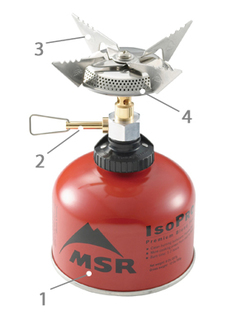
A Gas Stove
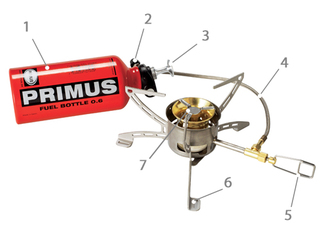
A Pressurised Liquid/Multifuel Stove
Parts of a Gas Stove
1. Gas cartridge / cannister - This contain the liquified gas
2. Valve - This valve needs to be opened to release the gas into the burner - you can adjust the value to allow varying amounts of gas through, therefore allowing you to control the size of the flame.
3. Foldaway pot supports - These support the pan. They fold away to reduce the overall size of the stove.
4. Burn area - On the example stove shown here (the MSR Superfly Auto) the burn area is much larger, which means that the flame is less likely to be blown out by the wind.
Parts of Pressurised Liquid / Multifuel Stoves
1. Fuel bottle - This contains your fuel and needs to be pressurised before commencing.
2. First valve - This valve needs to be opened as part of the priming process
3. Pump - The pump is used to pressurise the fuel bottle
4. Flex fuel line - This feeds the fuel to the stove and allows the stove to be packed noticeably smaller
5. Second valve - The second valve is opened once the stove has been primed
6. Foldaway foot and pot supports - The supports on this type of stove tend to be wider to be able to handle larger pans
7. Flame spreader - This is the disc that sits above the flame and spreads it out. It is held in place by leg-like clips
How do Stoves Work?
GAS STOVES
Gas stoves utilise gas cartridges. These cartridges contain liquified gas, normally a mixture of butane and propane, which vapourises as it leaves the storage bottle, arriving at the burner as a gas.
You therefore just attach (screw) the stove onto the gas cartridge, twist the valve open and light the burner.
PRESSURISED LIQUID / MULTIFUEL STOVES
The first thing you need to do is 'prime' the stove. This involves first pressurising the fuel bottle and then preheating the burner. Priming is required to get the fuel vapourised in order to get a good and clean combustion.
Once the burner is preheated, open the second valve and the orange flame will turn into a strong blue flame.
Comparison Tables:
Please note that the prices quoted in this table are the recommended retail price and are subject to change.
GAS STOVES
Make + Model
PrimusMimerDuo
Primus express
Primus express
spider
Primus Express
Ti+Piezo
Primus Gravity
II EF
PrimusEtaPackLite
MSR Pocket
Rocket
MSR Superfly
MSR Reactor
JetBoil Flash
Personal Cook
System
JetBoilSolTitanium
JetBoil Helios Cooking System
Price(RRP)
£22.99
£29.99
£44.99
£49.99
£64.99
£91.99
£29.99
£59.99
£140
£79.99
£130
£130
Weight
257g
82g
198g
86g
264g
596g
85g
131g
496g
397g
260g
733g
BoilTime (1Lwater)
3 mins
3.15mins
4.5mins
4 mins
3 mins
2.5mins
3.5mins
3 mins
3 mins
4 mins
4 mins
3 mins
Burn
time
70 mins
85 mins
119 mins
85 mins
90 mins
90 mins
60 mins
60 mins
109 mins
90 mins
90 mins
72 mins
Ideal usage
Budget/international
Fast/light
Solo/Alpine
Fast/light
Trek/Alpine
Lightweight
Fast/light
International
Alpine
Fast/light
Fast/Light
Base camp
Notes
Versatile, mounted adaptor
Light but durable
Lightest hose mount stove
Titanium, piezo lighter
Used in low temperatures
Contains 1.2L pot&strainer
World's best seller
Fits variety gas cannisters
1.7L hard anodised pot
Colour change heatindicator
Lightweight titanium
2L flux ring pot, burner base...
PRESSURISED LIQUID FUEL STOVES
Make +
Model
MSR XGK EX
MSR dragonfly
MSR whisperlite
internationale
Primus Omnifuel
Price
(RRP)
£140
£130
£89.99
£145
Weight
(inc fuel
pump)
374g
395g
330g
441g
Boil time
(1L water)
2.8mins
3.5mins
3.5mins
3mins
Burn time
(600ml
fuel)
109mins
126mins
110mins
182mins
Ideal
use
Expedition
Base camp
Expedition
Expedition
Fuel
White gas, petrol, paraffin,
diesel, aviation fuel.
White gas, petrol, parafin.
Gas cartridge and liquid fuel.
COOKWARE
Material
Stainless steel
Aluminium
Titanium
Pros
Durable, cheapest
Lightweight
Lightest, very strong and durable
Cons
Heavy
Weakest
Most expensive
Example products
-MSR stowaway, MSR
alpine cookset
-MSR Base2 potset, Primus
ETA pot
-Snow peak mini solo titanium, MSR Quick 1 titan pot



Let us know you agree to cookies
We use marketing, analytical and functional cookies as well as similar technologies to give you the best experience. Third parties, including social media platforms, often place tracking cookies on our site to show you personalised adverts outside of our website.
We store your cookie preferences for two years and you can edit your preferences via ‘manage cookies’ or through the cookie policy at the bottom of every page. For more information, please see our cookie policy.