
WATERPROOF AND BREATHABILITY RATINGS EXPLAINED
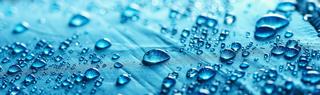
If you’re heading to the mountains waterproof gear is essential. Whether you’re playing in the snow, hiking, or climbing, outdoor weather can be unpredictable, especially in the mountains. Waterproof and breathable fabrics will keep you dry and comfortable, which we can all agree is pretty important in outdoor sports.
So, what is waterproofing, and what do the numbers really mean? We give you the lowdown on everything you need to know about waterproofing and breathability.
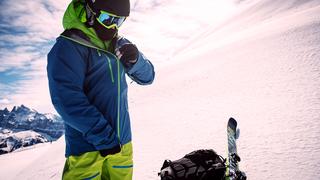
What do they do?
Waterproof fabrics are resistant to water penetration. This is typically done using a membrane or a coating that act as a barrier, preventing moisture from permeating the fabric, keeping you dry and comfortable.
Breathable fabrics allow sweat in the form of water vapour to escape from the inside of the fabric to the outside.
Whilst it is common for a fabric to be waterproof and breathable, there are different variations so some fabrics may prioritise certain properties over others. Some fabrics may be more waterproof and some fabrics may be more breathable to cater for the kind of activity that you are trying to do.
A waterproof and breathable jacket is essential gear for the slopes, no question. But finding the right one for you isn't always so simple. Getting the right levels of waterproofness and breathability will make sure you stay comfortable during long days of intense shredding.
What do the numbers mean?
Waterproofness Ratings:
- 5,000mm: This is the minimum rating for a jacket to be called rainproof, however, it won’t stand up to much more than a light shower.
- 10,000mm – 15,000mm: A jacket in this range will withstand most downpours as well as heavy snow, but will soak through over time if subjected to pressure, such as crashing in wet snow, kneeling or sitting down, or a heavy pack.
- 20,000mm and Up: This is the rating you should look for if you plan to be out in all conditions carrying a heavy load.
.
Breathability Ratings:
- 5,000 – 10,000g/m²: This level of breathability is fine for resort skiing, urban travel or camping in the rain, but will get a bit clammy during high-intensity hiking or climbing.
- 10,000 – 15,000g/m²: Jackets in this range are suited to more adventurous travel or backcountry skiing, but breaking trail through snow or straight uphill might prove too much.
- 15,000 – 20,000g/m² & above: An extended trip to the hills, trekking in warm climates or otherwise working hard and perspiring heavily will require a jacket this breathable.
Should I just go for the highest rating?
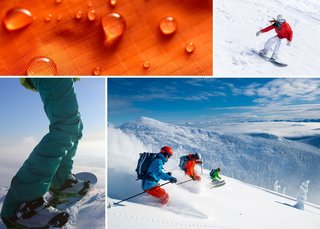
Not necessarily. The waterproof and breathability ratings you need will depend on the conditions and the activity that you are doing. For instance, if you are mainly a piste skier in dry conditions you can get away with a lower waterproof rating whereas if you are a back-country skier in wet conditions you will need a high waterproof rating so you’re not soaked from snow, and high breathability rating so you are not drenched in sweat.
Generally, a minimum of 5,000mm is good for both skiing and snowboarding in cold but clear conditions, especially if you enjoy taking regular breaks. 5-10,000mm is ideal for those who spend long days out on the mountain, in all weather conditions; while 10-20,000mm is best for those in wetter climates or skiers and snowboarders who prefer backcountry.
| Waterproof Rating (mm) | Level of Water Resistance |
| 0-5,000mm | No resistance/Little resistance |
| 6,000-10,000mm | Some resistance |
| 11,000-15,000mm | Normal resistance |
| 16,000-20,000mm | High resistance |
| 20,000mm + | Highest resistance |
Can outerwear be fully waterproof?
Although fabrics can be fully waterproof, such as rubber and wax, outwear for active sports will usually be varying degrees of water-resistant, as with enough water, wear, and pressure, it will eventually leak.
It is important active outerwear retains an element of breathability, otherwise, you’ll keep the water out but soon be wet from your own perspiration. As a result, most outwear balances protection with breathability.
How does it work?
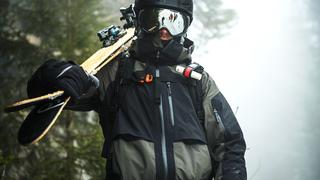
Waterproof fabrics have two or three layers: an outer layer, a membrane and a tri-coat mesh.
- The Outer Layer: Also known as a ‘face fabric’, this is made of nylon or polyester. Its main roles are to provide initial protection from the elements and look stylish. It is normally treated with DWR so it is water resistant. This is not the same as waterproof, think of it as the first line of defence against water as it will help prevent fabric saturation.
- The Membrane: This is where the magic happens. These are typically made of Teflon (ePTFE), which have small holes that stop water getting in but allow water vapour out. ePTFE membranes can become less effective at keeping out water if they are contaminated by oil or sweat so now they are coated with a Polyurethane (PU) membrane or another oleophobic coating.
- Inner layer: Finally, the 2-layer laminate (outer layer + membrane) is bound to a mesh. The mesh increases the breathability of the fabric and protects the membrane. Mesh can be used impacts the classification of the fabric, 2-layer fabrics will have a mesh or loose fabric lining whereas 3-layer fabrics will have a more lightweight mesh. The main difference is in its breathability, fit and price. 2-layers are bulkier and less breathable but cheaper. 3 layers tend to be more durable and breathable but are more expensive.
Construction Types
Sitting alongside their waterproof and breathability ratings, these fabrics are also typically classed in layers; either 2 layer, 2.5 layer, or 3 layer, often abbreviated to L.
2 LAYER
2-layer will have a face fabric bonded to the waterproof/breathable laminate with a hanging liner to protect the membrane. The hanging liner isn’t glued or bonded to the membrane meaning it has a looser fit and can be a bit bulky. As there are only two layers it is very flexible and comfortable. It is also cheapest out of the waterproof constructions but this does mean you will compromise on breathability, durability and protection.
2.5 LAYER
Like the 2-layer it will have a face fabric and a waterproof/breathable membrane but will have a partially bonded inner liner. This is the most lightweight option and is cheaper than the 3-layer, but it won’t be as breathable or durable.
3 LAYER
This has all the layers, outer layer, membrane and a fully bonded inner layer. The membrane is fully sandwiched so it is completely protected, meaning it will last longer and provide more protection. As it is more durable they tend to more expensive and the 3-layer construction means it is bulkier.
This is the most advanced construction offering a protective, lightweight, durable, and most importantly breathable fabric, but it is more expensive.
Things to look out for
1. Seam sealing: When clothes are sewn together the needle makes tiny holes, which water could leak through. To stop this from happening the seams are “taped over” with waterproof tape. They can either be fully or critically taped, so all the seams are taped or just the most exposed areas.
2. DWR: Durable Water Repellent is usually applied to exterior fabrics for extra waterproofing. It may become less effective over time but it is still a useful feature to look for as it provides you with an extra level of protection.
3. Fabric care: Different membranes have different care instructions. Some membranes like GORE-TEX have easier care instructions, whereas others have more complicated care procedures to maintain the waterproofing.
4. Brand: There are many kinds of membranes, from GORE-TEX to eVent to brand specific membranes by Marmot, North Face and Mountain Hardwear. These different membranes will be better for different things and have different testing standards. Generally, whilst both are waterproof and breathable GORE-TEX is warmer and easier to care for, whilst eVent is more breathable but will require more reproofing/maintenance.
So what should I get?
Depending on the conditions, activity and personal preference the right waterproof jacket for you will vary.
If you are doing a high aerobic activity, like climbing or running, then you will want something more lightweight and breathable. eVent and Pertex Shield technology are highly recommended for those looking for higher breathability ratings at a fraction of the weight.
If you need a good all-season all-rounder for activities like walking then a softshell will serve you well. Bridging the gap between fleeces and waterproof jackets (or hardshells) softshells offer water resistance, breathability and warmth at a fraction of the wright. Whether you need a lightweight outer layer or a breathable mid-layer softshells are the perfect in-between for your outdoor adventures.
If you are going to be outside in more extreme conditions, for instance, longer and more exposed hikes, then a hardshell with increased waterproof capabilities is your best bet. This will use a 3-layer construction with a durable face fabric that will be very resilient in a wide range of conditions.


Let us know you agree to cookies
We use marketing, analytical and functional cookies as well as similar technologies to give you the best experience. Third parties, including social media platforms, often place tracking cookies on our site to show you personalised adverts outside of our website.
We store your cookie preferences for two years and you can edit your preferences via ‘manage cookies’ or through the cookie policy at the bottom of every page. For more information, please see our cookie policy.